

 Buy with Prime



What does “stem cell” on an eye serum label tell you about the results you can expect? The label alone says little: it does not show whether the finished product was tested or whether a study measured changes in the eye area.
One trial examined a cream with apple-derived plant stem-cell extract. It reported lower wrinkle depth after use, but that finding applies to the tested cream and study participants, not automatically to every serum with similar wording. Cosmetic ingredients and formulas are not interchangeable.
A label is like a recipe title: it suggests what may be inside, but it cannot confirm how the finished product performs. Read the ingredient list, then look for evidence on the specific formula and the outcome measured. Claims about the appearance of dryness or fine lines are different from claims to treat an eye condition.
Living eye stem-cell therapy is a separate medical treatment, not a cosmetic serum. Cosmetic wording should not imply medical care or government approval. The useful question is not whether a bottle says “stem cell,” but what the product was tested to do and how closely that evidence matches its formula.
Table of Contents
- What Stem Cell Means on an Eye Serum Label
- What the Clinical Evidence Actually Covers
- Realistic Eye-Area Benefits and Their Limits
- Safety Rules for Products Used Near the Eyes
- How to Apply an Eye Serum Step by Step
- Choose a Label That Passes the Checklist
What Stem Cell Means on an Eye Serum Label
| Ingredient type | What it physically is | Living cells? | Typical label wording |
|---|---|---|---|
| Plant stem-cell extract | Extract made from cultured plant cell lines, such as apple | No | Plant stem cells, stem cell complex |
| Conditioned media | Liquid left after cells grow in culture, containing signaling molecules | No | Stem cell-derived, growth factor complex |
| Peptides | Short amino acid chains such as Argireline, SNAP-8, and SYN-AKE | No | Peptide complex, signal peptides |
| Hyaluronic acid | Water-binding molecule that supports hydration in the upper skin layers | No | Hydrating, plumping |
A bottle labeled ocean that holds sea salt is accurate about where the salt came from. It doesn't put the sea in your hand. A stem cell eye serum usually works the same way. The wording points to a derivative, such as an extract, conditioned media, or a peptide, not a living cell.
What the front of the jar skips
Shoppers often hear "stem cell" and picture living human tissue. Independent scientific reviews report that cosmetic products generally contain extracts or derivatives from cultured plant cells, not living stem cells. Those cells can't remain viable through preservatives and cosmetic processing. Their size and rigid cell walls keep them from functioning as transplanted cells in human skin.
The mix-up is sharper around the eyes, where the same phrase can sound like a medical effect on crow's feet, dryness, puffiness, or pigmentation. Any benefit is ingredient-specific and formula-specific. Those reviews also describe inconsistent terminology, small or early clinical evidence, and a lack of standardized protocols. A test on one ingredient isn't a test of the finished serum, and a cosmetic doesn't have to clear a randomized trial before it is sold. For a closer look at how these botanicals are discussed, see these notes on plant stem cells for skin.
None of the four rows in the table is alive. Conditioned media is the liquid left after cells were grown, a broth of signaling molecules without the cells. Peptides are short amino-acid chains. Argireline is six amino acids, and Snap-8 is eight. Hyaluronic acid is a water-binding molecule used for the look of hydration in the upper skin layers. If the label stops at "stem cell complex" and never names a botanical, you still don't know the dose or the vehicle.
How a plant-cell extract is made
Cell lines are grown in lab culture, so the supply doesn't depend on harvested fruit.
The cells are broken open or treated with a solvent, which releases their compounds into a liquid.
That liquid is filtered and standardized, so the formulator can add a consistent amount.
The extract is blended into a serum base with preservatives. Processing and preservatives stop microbes and cells. A rigid plant cell wall can't integrate into human tissue, so the result is a bundle of molecules, not a working cell.
Label check: Find a botanical name such as Malus domestica, look for the words extract or complex, and confirm whether the claim describes the finished product or only one ingredient.
A stem cell label tells you where an ingredient came from, not what it does to the skin around your eye.
What the Clinical Evidence Actually Covers
What does the word “stem cell” on an eye-serum label tell you about results? By itself, very little. The evidence comes from different kinds of products and studies, so read each finding in context: medical cell therapy, a review of medical research, a cosmetic cream trial, and consumer feedback do not answer the same question.
| Evidence source | Design and size | Key finding | What it supports |
|---|---|---|---|
| 2019 limbal stem-cell trial | Multicenter, single-blind randomized trial, 20 patients | Cultured corneal epithelial stem cells on amniotic membrane compared with membrane alone | Medical cell therapy for limbal stem-cell deficiency, not a serum |
| 2022 ocular-surface review | Review of stem-cell studies for ocular-surface disorders | More than 80% of studies used animals or other nonhuman subjects | Shows human evidence is still limited |
| PhytoCellTec Malus domestica cream trial | Four-week trial, 20 subjects, cream format | Reported lower wrinkle depth at two and four weeks | A short-term visible effect, not eye-specific or evidence of regeneration |
| Editorialist consumer survey | Consumer survey, sample size not reported | 87% of respondents agreed the under-eye area looked smoother | Perception data, not a controlled measurement |
The medical evidence concerns treatment of damaged eye tissue. In the 2019 trial, patients with bilateral limbal stem-cell deficiency received either cultured corneal epithelial stem cells on an amniotic membrane or the membrane alone. Both groups also used autologous serum eye drops and immunosuppressive medication. This comparison helps separate the effect of cell transplantation from supportive treatment. The cells were placed on damaged ocular tissue, so the trial does not show that an over-the-counter serum changes wrinkles, eyelash density, or the skin around the eyes.
A 2022 review of ocular-surface stem-cell research found that more than 80% of the studies it covered used animals or other nonhuman subjects. It discussed possible roles in limbal stem-cell deficiency, corneal endothelial dysfunction, and dry eye, while noting that use in human treatment was not fully established. These are medical research questions, not proof that a cosmetic serum can reproduce cell transplantation or tissue integration. Growth factors for skin are a separate, nonliving ingredient category, with claims that should be assessed on their own rather than treated as evidence for living-cell therapy.
The cosmetic evidence is narrower. In a four-week trial, a cream containing the apple-derived extract PhytoCellTec Malus domestica was associated with about 8% lower wrinkle depth after two weeks and 15% after four weeks in 20 subjects. Those results concern one cream and a short-term change in wrinkle appearance. The study was not specific to the eye area, so its findings do not establish what a stem cell eye serum will do.
Consumer feedback answers a different question again. In 2025, Editorialist reported that 87% of survey respondents agreed the product made the under-eye area appear smoother. That is a report of perception, not a controlled measurement of wrinkle depth.
Read the evidence like a label: the ingredient name does not predict the result. The strongest conclusions here are tied to the product and outcome each study tested. Appearance claims may have some support from cosmetic testing; claims of eye-tissue regeneration require evidence on that specific formula and use.
Realistic Eye-Area Benefits and Their Limits
What can an eye serum change in the mirror, and what should the label not lead you to expect? Read its ingredients as clues to possible appearance effects, not as proof that “stem cell” wording predicts results. Hydration may soften the look of fine lines while it lasts. A cosmetic serum's visible effects are different from restoring the tissue beneath the skin.
Crow's feet and expression lines: Peptides and hydrating ingredients can make lines appear less noticeable. The effect depends on the finished formula and what you apply to the skin. It does not show that the skin's structure has changed.
Dryness and dehydrated fine lines: Hyaluronic acid binds water in the upper skin layers. That added water can make dehydration-related lines look softer while the product is on the skin.
Puffiness: A light, soothing texture may leave the area looking calmer. Evidence specific to eye-area puffiness is limited, so treat this as a possible appearance benefit rather than a promised result.
Dark circles: A serum may brighten the way a shadow appears. Its effect on the look of a dark circle should not be confused with addressing sleep, genetics, or vascular changes.
The apple-extract trial assessed results at two weeks and four weeks. Use that as a practical observation window, not a prediction that another formula will work on the same schedule. Take photos in consistent lighting and at the same time of day, and avoid switching products midway through the comparison.
The FDA's anti-aging examples explain the distinction between appearance claims and claims about how skin functions. A product described as making wrinkles look less noticeable through moisturization is generally making a cosmetic claim. Claims that it removes wrinkles or increases collagen production may be treated as drug or medical-device claims because they concern structure or function. Cosmetics do not need premarket approval; drugs generally do. A discussion of collagen under the eye is clearest when it stays focused on appearance.
Formulators may include Snap 8 Peptide Serum Booster, which contains Acetyl Octapeptide-3. It is a formulation ingredient used for the appearance of softened expression lines, including around crow's feet, rather than a finished eye serum. It should not be applied undiluted.
The label alone cannot establish regeneration, and a serum is not a substitute for injections. A fast promise on a carton is not evidence of a fast visible change. Set a modest expectation: the skin may look smoother and lines less noticeable over time, while the underlying tissue remains unchanged.
Safety Rules for Products Used Near the Eyes
Skin around the eyes is thinner and more reactive than skin on the cheek, so the first check is the label. If it doesn't say the product is meant for the eye area, leave it on the face. The FDA advises consumers not to use cosmetics near the eyes unless they're specifically intended for that use. "Plant," "natural," or "stem cell" doesn't establish ocular safety, tolerability, or an adequate preservative.
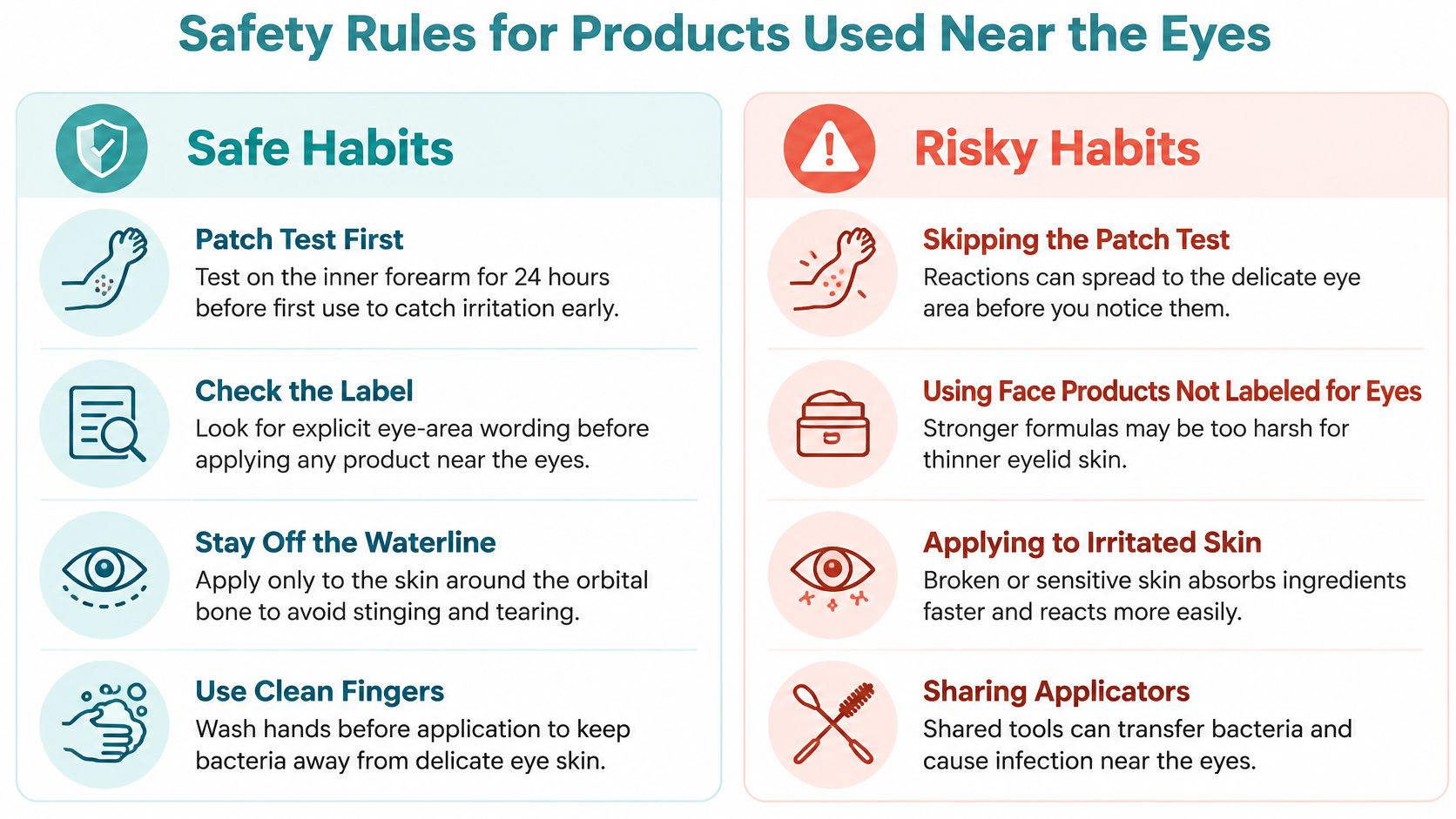
- Patch test on the jawline or inner forearm for several days. Reactions often show up after repeated contact, not on the first swipe.
- Skip broken, irritated, or sunburned skin. Stinging rises there, and ingredients sit on a surface that isn't intact.
- Keep the applicator off the lash line and the waterline. Don't dip a used tool back into the jar, because that spreads contamination.
- If you wear contact lenses, take them out before you apply. Follow that product's own guidance before you put the lenses back in.
- Stop if you get burning, stinging, persistent redness, swelling, or any change in vision. Those symptoms are a reason to get medical advice, not to "push through."
- If product reaches the eye, rinse gently with clean water or saline. Seek medical advice if irritation doesn't settle.
- If you have eczema or blepharitis, ask a dermatologist or an eye doctor before you add something new. The eye margin is a different surface from the cheek.
A serum made for periocular skin isn't automatically suitable for the eyelid margin or the inside of the eye. Applicator hygiene matters as much as the ingredient list. If fragrance is a trigger for you, start from fragrance-free skincare and add one product at a time.
How to Apply an Eye Serum Step by Step
Use the serum twice a day, and give the routine at least four weeks before you judge it. One lucky morning isn't a result.
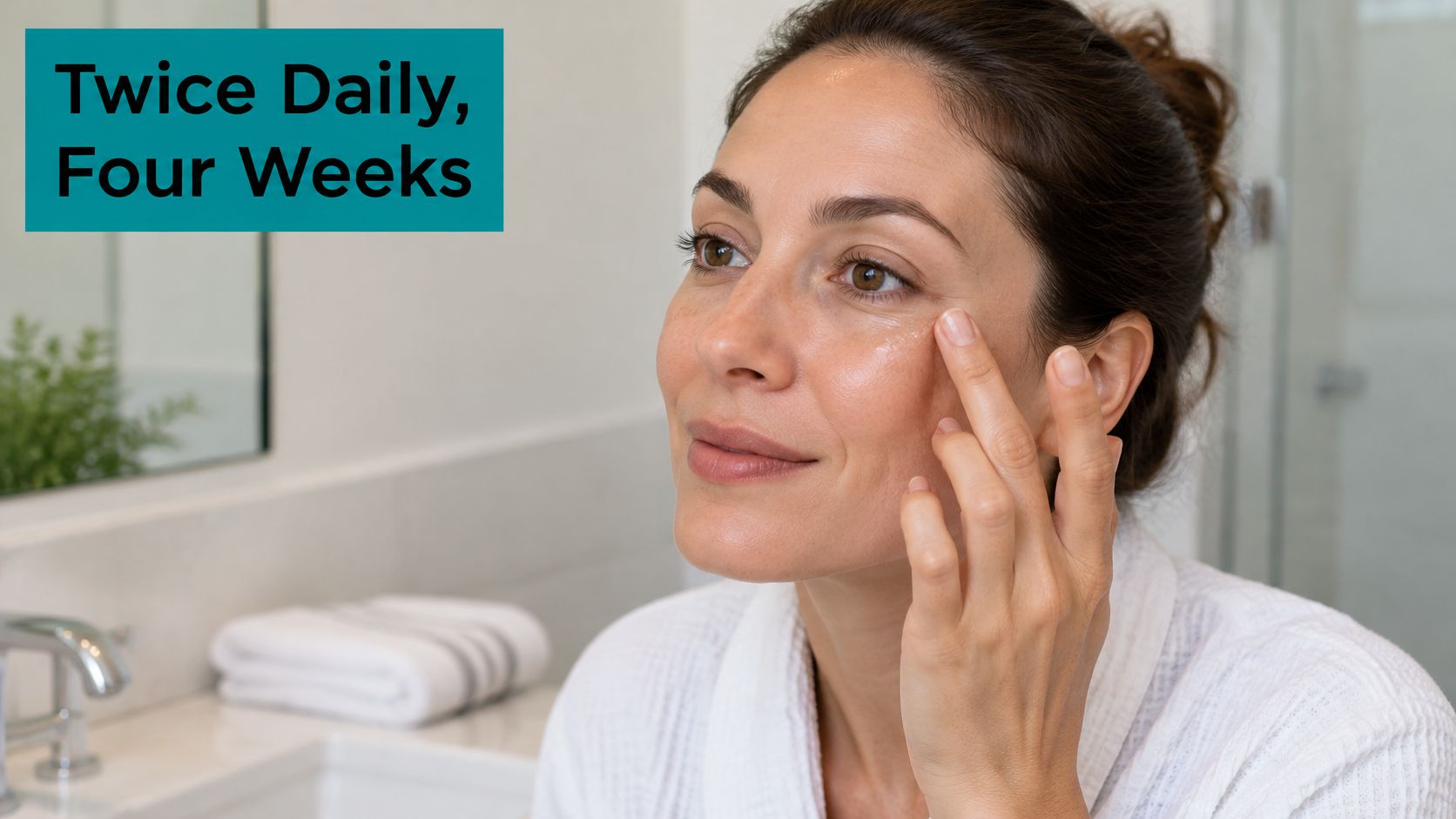
- Cleanse and pat dry. Serum sits poorly on cleanser residue or leftover moisturizer, so the base layer never spreads evenly.
- Confirm the patch test stayed calm for the full test period. A quiet forearm is your permission slip, not a guess.
- Dispense a small amount. A pea-sized dot split between both eyes is enough, unless the label specifies a drop count.
- Pat with the ring finger, the lightest finger. Move from the inner corner outward along the orbital bone, and stop short of the lash line and the waterline.
- Wait about a minute. Letting the layer settle before moisturizer reduces the chance that product migrates toward the eye.
- Apply sunscreen in the morning. UV exposure is the most controllable factor in how fine lines look over time.
- Store the bottle in a cool, dry place, close the cap after each use, and retire it when the opened-life date passes. Air and warmth age the formula before your skin does.
The same order shows up in broader guidance on how to use a face serum. Around the eyes, the amount and the pressure matter more than the brand name.
Three habits undo the routine. Heavy hands push product toward the eye. Hard tapping irritates thin skin and moves the serum off the orbital bone. Applying over broken skin turns a cosmetic step into a sting. If the area is already red, wait.
Light fingers, a small dose, and a full minute of waiting do more than a second coat.
Choose a Label That Passes the Checklist
Before buying a second serum, read the bottle as a formula, not a promise. Each label detail answers a different question: where it can be used, what it contains, and what its claims actually mean.
- Look for eye-area intended use. Face-only wording does not establish that a product is meant for the delicate skin around the eyes.
- Check that a botanical or peptide has an INCI name. Ingredient order can offer a rough clue to its concentration, like a recipe listing its main components first. In the United States, ingredients above 1% are generally listed in descending order; those at 1% or below may appear in any order. The list still cannot tell you the exact amount.
- Read the claim carefully. Cosmetic wording describes appearance. A claim to treat a condition or remove wrinkles goes beyond that scope.
- Be wary of claims of government approval. The FDA doesn't approve ordinary cosmetics, ingredients, or labeling before sale, except for color additives. Voluntary registration does not mean a serum is FDA-approved, and its label should not suggest otherwise.
- For an extract-based serum, check for a preservative system and suitable packaging, such as an airtight pump. Botanical extracts still need protection to help keep a formula stable.
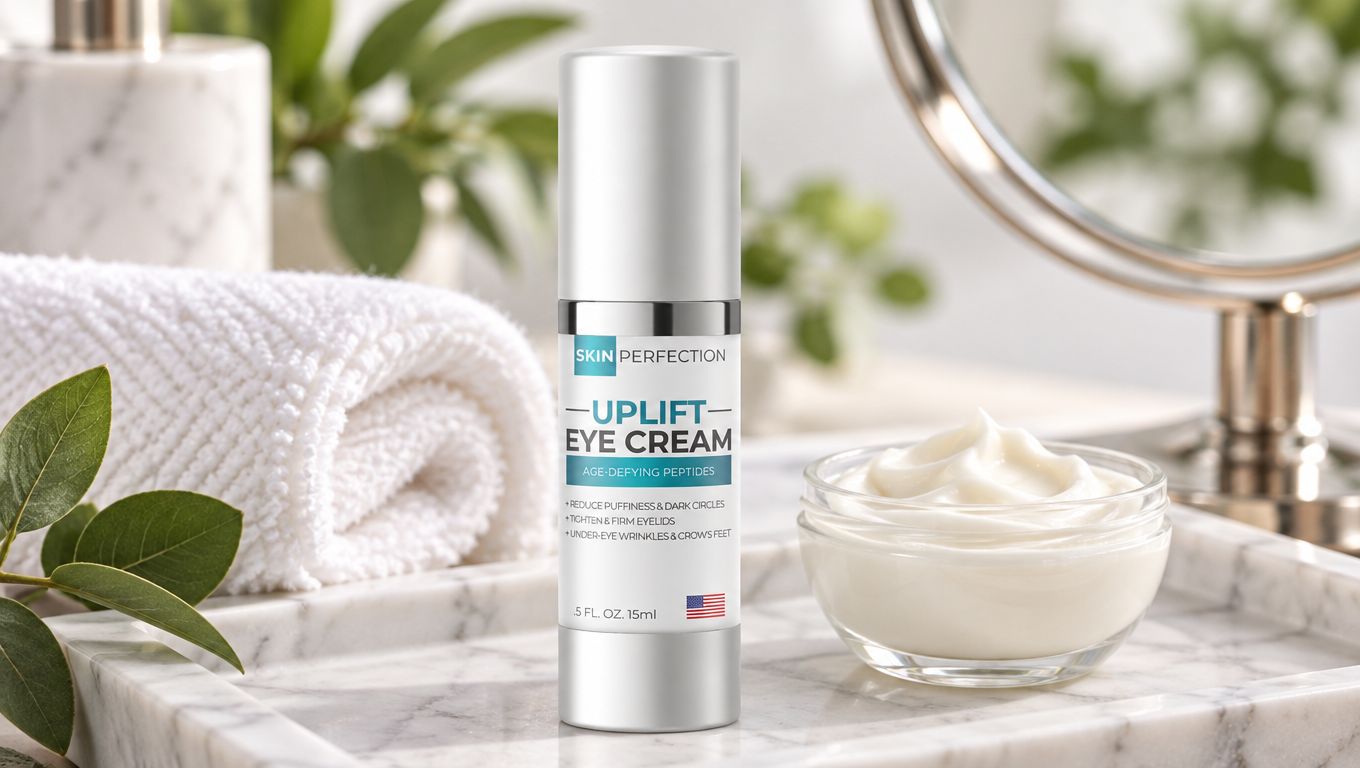
Use the same checklist to assess Uplift Eye Cream. Confirm the complete ingredient list on the package before deciding what its label supports; a product name alone cannot establish which extracts or peptides the formula contains.
A cosmetic eye serum may suit someone seeking smoother-looking skin. A diagnosed eye condition calls for an eye doctor, not a cosmetic claim.
Skin Perfection sells skincare and lotion-making supplies for people who want to read ingredient labels before choosing a product. For a stem cell eye serum, focus on intended use, named ingredients, and claims that stay within cosmetic appearance. Visit Skin Perfection to compare eye-area formulas and the raw materials behind a cosmetic routine.