

 Buy with Prime



The most popular version of an at-home facial is a long, once-in-a-while session stacked with scrubs, masks, and every serum on the shelf. That session feels productive and usually does very little. A useful how to do anti aging facial at home plan is a weekly rhythm. Daily cleansing, a thin serum, moisturizer, and sunscreen carry the week. Massage, one mask, and one exfoliation are optional extras that drop the moment the skin complains.
Table of Contents
- How Often Each Step Belongs in Your Week
- Check Your Skin Before You Exfoliate
- How to Run the Facial Step by Step
- Massage Strokes That Lift Without Dragging
- Choosing Peptide and Stem-Cell Serums
- Aftercare and Adjustments for Climate and Skin Tone
- Start Your First Facial This Week
How Often Each Step Belongs in Your Week
Daily broad-spectrum sunscreen is the step with the strongest experimental support, not the mask. In a randomized Australian trial published in 2013, PubMed reports that 903 adults aged 25 to 55 were assigned either to apply broad-spectrum sunscreen every day, with frequent reapplication, or to use it at their discretion. After 4.5 years, the daily-use group had 24% less measurable skin aging than the discretionary-use group (relative odds 0.76, 95% confidence interval 0.59 to 0.98). Researchers reported no detectable increase in skin aging among daily users, and the benefit showed up across age, sex, skin color, occupation, smoking status, and previous skin-cancer history. The trial covered face, neck, and hands.
Build the week around that habit. Sunscreen is the final morning step, after moisturizer, even when you skip everything else.
| Step | How often | Amount or timing | Safety rule |
|---|---|---|---|
| Cleanse | Twice daily | 60 seconds, lukewarm water | Never scrub hard |
| Peptide serum | Morning and evening | Pea-sized amount for full face | Stop if stinging persists |
| Massage | 3-5 times a week | 3-5 minutes during serum application | Light pressure only |
| Exfoliation | Once a week | Chemical or enzyme product, per label | Only if skin check passes |
| Hydrating or clay mask | Once a week | Thin layer, 10-15 minutes | Rinse fully, never leave on past label time |
| Moisturizer | Twice daily | Thin layer after serum | Use a richer layer in dry conditions |
| Broad-spectrum sunscreen SPF 30+ | Every morning | Final morning step, reapply every 2 hours outdoors | Never skip, even on cloudy days |
| Retinoid (if used) | Start every third night, then nightly | Pea-sized amount, per the product label | Never on an exfoliation night |
A sample week looks like this. Monday is mask night with massage. Tuesday, Thursday, and Saturday are the basic routine with massage. Wednesday starts with the skin check and gets exfoliation only if that check passes. Friday and Sunday stay basic. If you use a retinoid, begin every third night and move toward nightly over roughly four to six weeks, rotating those nights around Wednesday so they never land on exfoliation.
Mask frequency is easy to overdo. A practical mask frequency guide keeps that step at one night, not a nightly ritual.
Weekly rule: If irritation shows up, drop exfoliation and the mask first. Cleansing and sunscreen stay.
Check Your Skin Before You Exfoliate
Exfoliation is the step most likely to backfire. It can worsen dryness, irritation, and acne when you pair it with retinol, a prescription retinoid, or benzoyl peroxide. The American Academy of Dermatology advises you to consider the products you already use and to skip exfoliation on compromised skin. Excessive use can leave skin raw.
Run this check before every exfoliation night.
- No sting: Cleansing with lukewarm water does not sting or tingle.
- No tightness or peeling: Skin does not feel tight, and you see no flakes.
- No redness: Color looks like your usual baseline in daylight.
- No recent sunburn: Skin is not pink, hot, or tender from sun.
Only a full pass is a green light, and once a week is the ceiling for the typical reader at home. One calm week does not earn a second pass.
| Skin signal | Tonight's routine | Why |
|---|---|---|
| Calm skin, no stinging or peeling | Full routine, exfoliate once this week | Barrier is intact |
| Stinging or tingling after cleansing | Skip exfoliation and mask, cleanse and moisturize only | Barrier may be compromised |
| Redness, peeling or sunburn | Recovery-only facial with sunscreen the next morning | Exfoliation can worsen irritation |
| Using prescription retinoid or benzoyl peroxide | No exfoliant on the same night, alternate nights | Combined actives raise dryness and irritation |
| Eczema flare or recent cosmetic procedure | Pause the routine and check with your clinician | Skin needs time to recover |
A recovery-only facial is gentle cleanser, moisturizer, and daytime sunscreen. Nothing else, until the skin feels settled for two to three days. Patch test any new active on a small area of the jaw for three nights before it goes on the full face.
If an eczema flare or a recent procedure is in the picture, pause and talk with the clinician who is already treating you. A quick skin analysis habit, done in the same light each week, catches those signals before a scrub does.
How to Run the Facial Step by Step
One complete session takes about 20 minutes. The graphic below is the core flow. On a weekly facial night you insert the skin check, and you add exfoliation and a mask only when that check passes.
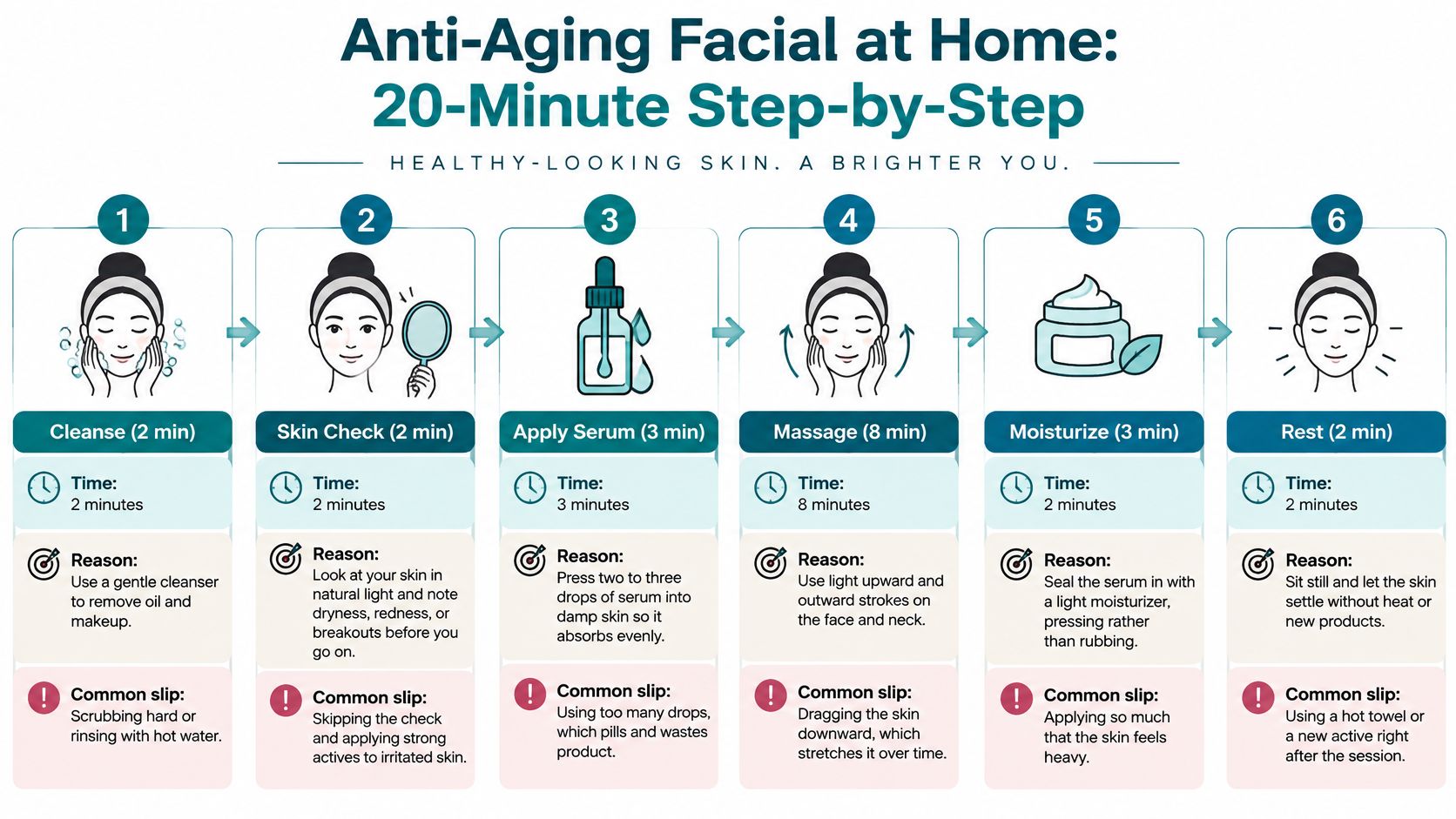
The session in order
- Cleanse for about 60 seconds with lukewarm water and a gentle gel or cream cleanser. Hot water strips surface oils and leaves skin tight. The common slip is scrubbing as if friction were the treatment.
- Prep with a warm, damp cloth, or a short steam of about two minutes, with your face at a comfortable distance. You want the skin soft, not flushed. Overheating causes redness that can hide real irritation.
- Exfoliate only if the skin check passes, using a chemical or enzyme product for the time on its label. The common slip is doing this on the same night as a retinoid. If the check fails, skip to patting dry.
- Apply a hydrating or clay mask for 10 to 15 minutes, then rinse fully. Leaving clay on until it cracks dries the skin. For a simple mix, stir one tablespoon of plain yogurt with one teaspoon of honey, patch test it on the jaw first, and skip it on exfoliation nights.
- Pat dry and leave the skin slightly damp. Rubbing with a dry towel undoes the point of a short cleanse.
- Massage for three to five minutes while you work in a pea-sized amount of peptide serum, using the strokes in the next section. Press, don't drag.
- Press in a thin layer of moisturizer so the serum stays on the skin instead of evaporating. A heavy coat that feels slick is too much for most faces.
What a good finish looks like
An hour later, skin should feel comfortable, look even and rested, and show no stinging or new redness. The glow you see right after a mask is mostly surface hydration. It is not a measure of lasting change in lines or tone.
People who want a deeper refresh sometimes look at clinic options such as microneedling for a refreshed complexion. That is a separate decision with a provider, not a step you add to this 20-minute night.
If the skin stings at step 3, the session is already over. Cleanse, moisturize, and stop.
Massage Strokes That Lift Without Dragging
Facial massage should move serum across the skin with light pressure. Dragging stretches the skin over time, especially around the eyes and jaw. Pressure should shift the skin slightly without pulling it. Use the same order every time so your hands learn it.
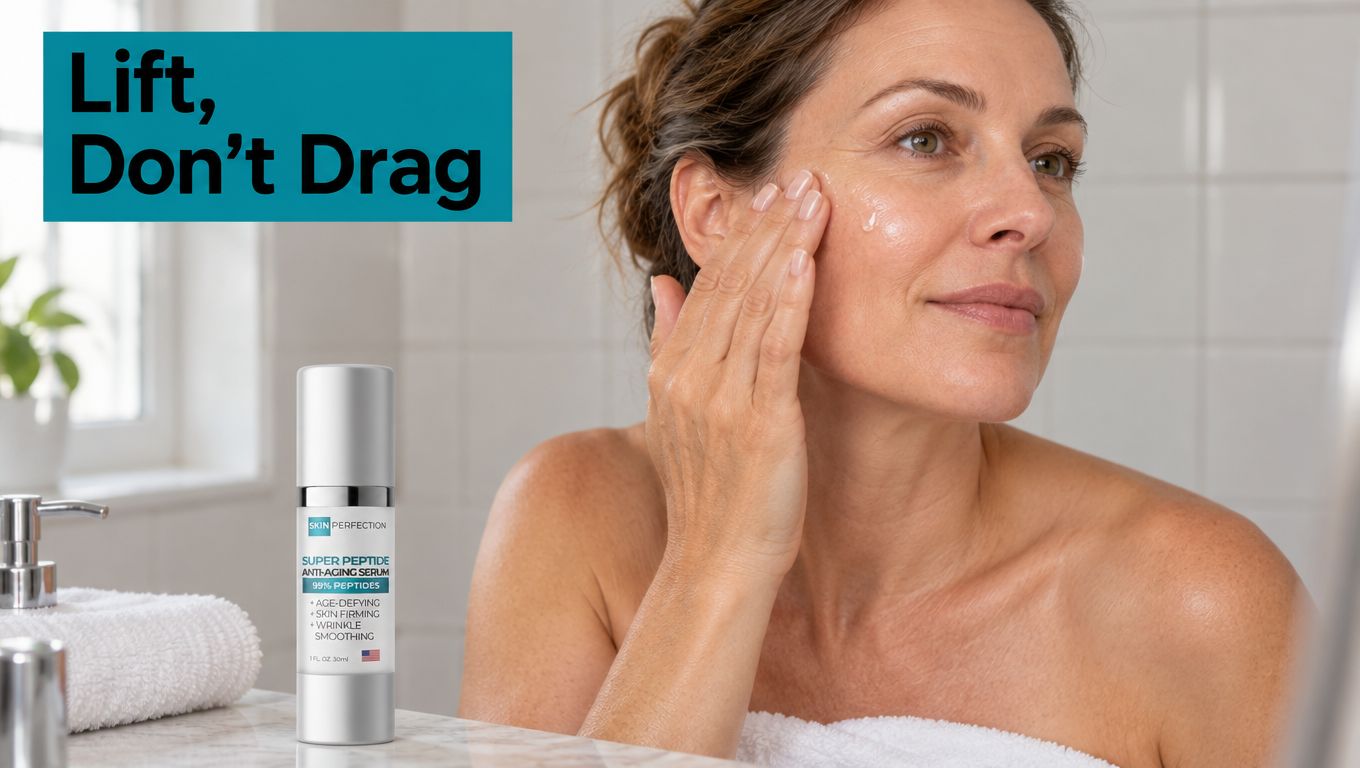
| Area | Stroke | Count and pressure |
|---|---|---|
| Forehead | Center outward, then upward | Five light sweeps |
| Brow | Inner brow toward the temple | Three light presses |
| Under-eye | Inner corner outward, ring finger | Five very light taps |
| Cheeks | Nose side toward the ear and upward | Eight medium strokes per side, flat fingers |
| Jawline | Chin toward the ear | Six medium strokes per side |
| Neck | Collarbone upward to the jaw, finish at the collarbone | Five light strokes |
Three to five minutes is enough. A longer session does not change the look of the skin the next morning. Do the massage while the serum absorbs so the step adds no extra time.
Two mistakes show up constantly. People press hard into the crow's feet, and they massage over broken or sunburned skin. Skip massage on those days. A short set of facial massage techniques is worth learning once, then repeating without adding force.
I would rather see five light sweeps than one hard pass. The skin should not stay red after you stop.
Choosing Peptide and Stem-Cell Serums
A serum changes how skin looks and feels from day to day. It does not stand in for sunscreen, and it does not rebuild skin. Peptides are short amino acid chains used in cosmetic serums to support the look of smoother, plumper skin. They work as a steady daily habit, not a one-night boost. Plant-derived stem-cell ingredients, including apple stem cell extracts, are antioxidant-style support for a healthy-looking complexion.
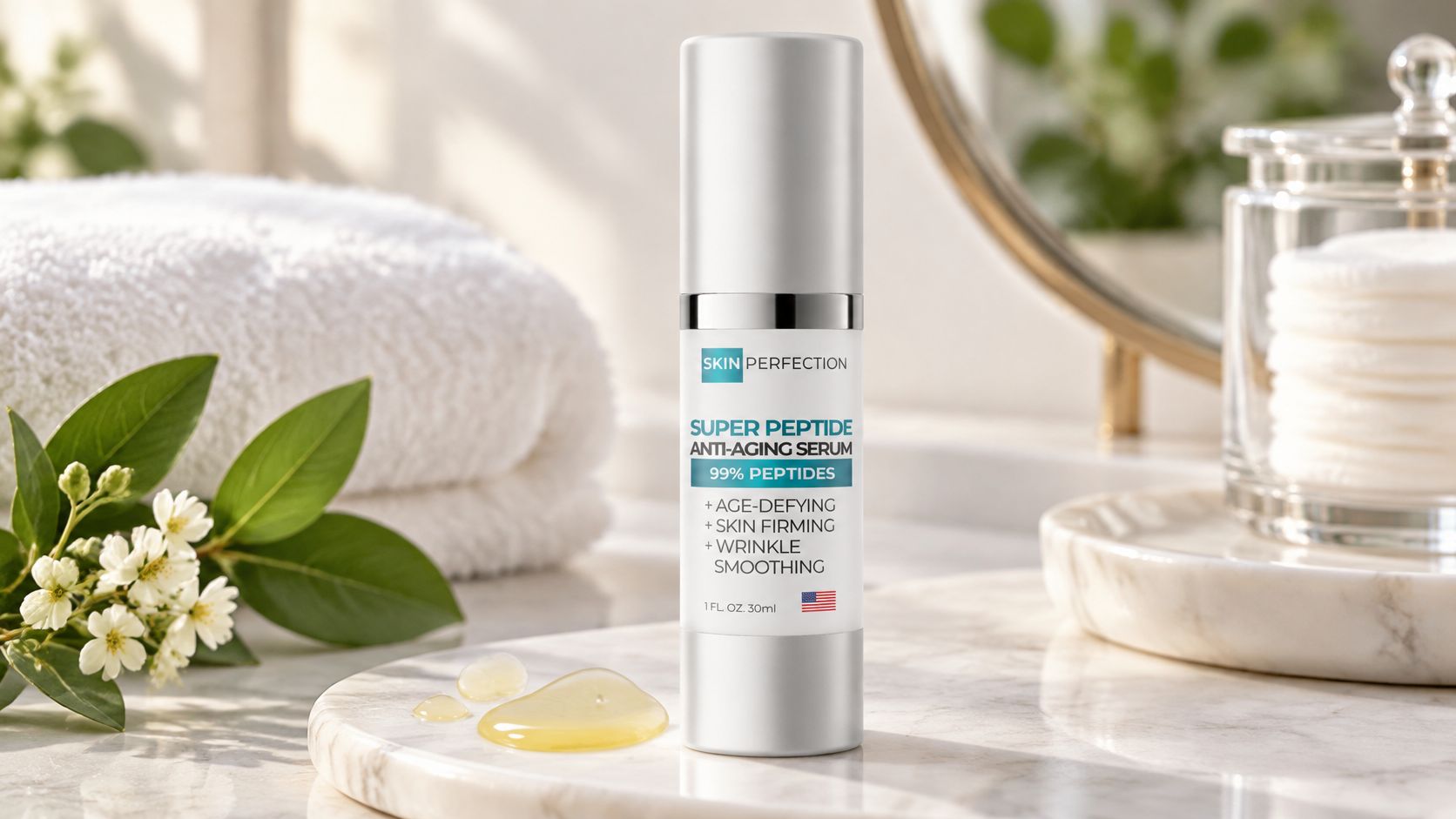
Super Peptide Anti-Aging Serum lists eight peptides, including Argireline Peptide Solution, Matrixyl 3000, and Syn-Coll. It is paraben-free, has no added fragrance, and is made for all skin types. Use a pea-sized amount, not a palmful.
| Active | Role in the routine | Pairing note |
|---|---|---|
| Peptides | Supports the look of smoother, plumper skin with steady daily use | Layer thin and water-based before heavier products |
| Plant stem-cell extracts (apple stem cell) | Antioxidant-style support for a healthy-looking complexion | Usually gentle; patch test first |
| Hyaluronic acid | Surface hydration for a plumper look | Apply to damp skin before heavier layers |
| Niacinamide | Helps even the look of tone and texture | Generally compatible with peptides |
| Vitamin C | Brightening look and antioxidant support | Use in the morning; may sting on compromised skin |
| Retinol | Smooths the look of texture over weeks | Introduce slowly; never on an exfoliation night |
Layering order
Put the thinnest, water-based serum on damp skin first. Follow with thicker serum or a cream. Sunscreen is last in the morning. Vitamin C belongs in that morning slot if your skin tolerates it. Retinol stays at night, on nights that are not exfoliation nights, and only after a slow start.
If you formulate your own base, read a stem cell serum note before you blend, and patch test the jaw for three nights. People comparing finished products with a wider shelf of cosmetic options can also look at skin-focused wellness from Maximum Health Products. Pick one serum you will use twice a day. A second bottle on the counter does not speed the week up.
Aftercare and Adjustments for Climate and Skin Tone
The hour after the facial decides whether the session helps or irritates. No new actives for an hour. No hot towel, steam, or workout that leaves the face flushed. Sunscreen goes on the next morning as the last step.
A few steady weeks of photoprotection matter more than any single mask. Harvard Health recommends broad-spectrum SPF 30 or higher every morning, including cloudy days and winter. UV, humidity, indoor heat, and air conditioning change how much cleansing and occlusion your skin will tolerate. A shorter routine often beats an aggressive one, because too much exfoliation leaves the protective surface raw and the irritation more visible.

| Condition | Adjustment | Watch for |
|---|---|---|
| Humid or hot climate | Lightweight gel moisturizer, shorter mask time | Clogged pores or heat rash |
| Dry, cold or heated indoor air | Richer cream and an extra hydrating layer under moisturizer | Tight or flaky skin |
| Deeper skin tones | Calm, non-stinging formulas and milder exfoliation | Dark spots after irritation |
| High UV or outdoor work | Reapply sunscreen every 2 hours | Pigment spots from missed reapplication |
| Oily or breakout-prone skin | Non-comedogenic gel serums, exfoliation at the low end of the range | Breakouts from heavy occlusion |
On deeper skin tones, irritation control comes first. Darkening after a rough exfoliation can outlast any redness you see the next morning. Hydration-related smoothing shows up quickly. Changes in the look of wrinkles and pigmentation take longer, so don't judge the routine in the bathroom mirror right after a mask.
Track tolerance, hydration, and pigmentation for several weeks. Take a photo every two weeks in the same light, with a clean face and no filter. Habits that support natural wrinkle prevention and self-care, including shade and a consistent morning screen, belong in that same log. If the photos show more redness than smoothness, scale back and read up on keeping the skin barrier comfortable before you add another active.
Start Your First Facial This Week
Day one: run the skin check and start a three-night jaw patch test of any new serum. Days two to four: cleanse, apply peptide serum and moisturizer, use sunscreen every morning, and massage once or twice. Day five: if the skin is calm, run the full facial with the mask and one exfoliation pass. Days six and seven: rest from exfoliation and masks and keep the basic routine.
After two weeks, use one rule. If the skin stays calm and texture looks smoother with better hydration, keep the weekly rhythm. If stinging, redness, or breakouts show up, drop back to the recovery-only facial for a week. A ready-made serum or a simple DIY base both fit this structure. Neither replaces daily sunscreen, and neither replaces a clinician's advice when you have a skin concern.
Skin Perfection makes cosmetic serums, moisturizers, and lotion-making supplies meant to support the look of smoother, more comfortable skin in a simple weekly facial. If you want a peptide serum for the pea-sized step in this routine, or ingredients for a formula you blend yourself, start with the catalog at Skin Perfection. Pick one product, patch test it, and keep sunscreen as the step you never skip.